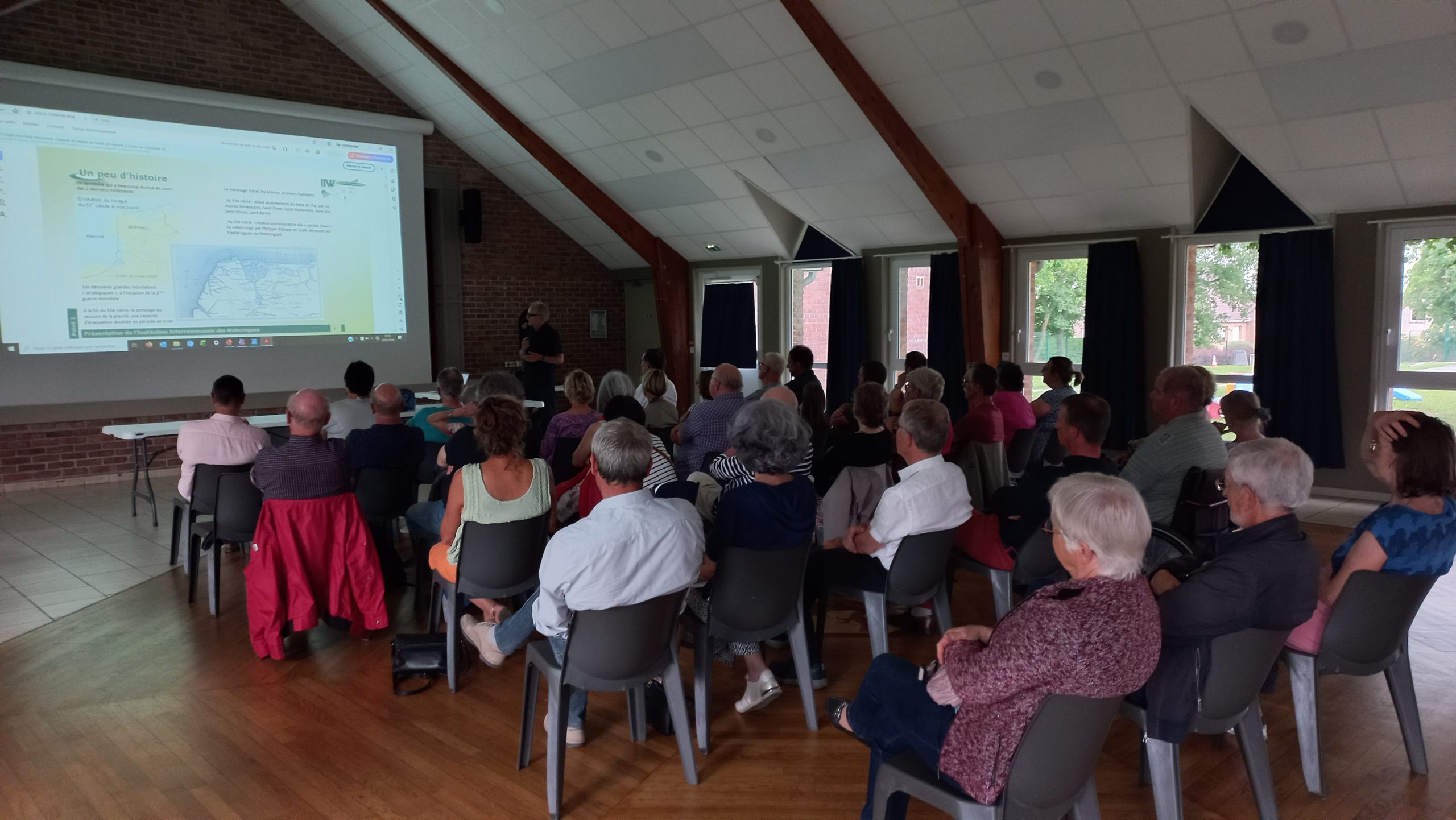
On the initiative of the ‘Comprendre’ association, our organisation, AQUA, was invited to speak about water sharing as our common heritage on 29 May in Socx.
Located within the Aa polder, which has been developed since the 7th century through the drainage of swamps and marshes, this area was in the media spotlight following the floods of the winter of 2023–2024. More than two years on, the memory of those floods remains vivid, and this discussion provided an opportunity to rediscover the history of hydraulic engineering in this delta ‘won’ from the sea, and to hear in particular about the wateringues, from the director of the Intercommunal Institution of the Wateringues, Philippe Parent.
The audience, comprising elected representatives, local residents, farmers, and both informed and novice members of the public, was keen to understand the interactions between different water uses—which are highly specific to this area, particularly vulnerable to the challenges of rising water levels, whether from the sea or inland. Indeed, the Wateringues Institution has seen its water management portfolio expand in recent years to include certain flood defences in Calais, Gravelines and Dunkirk, in addition to 140 km of canals requiring restoration.
Through presentations by Philippe Parent and Elodie Denizart, president of AQUA, the audience gained a clearer understanding of the ongoing evolution of the hydraulic structures in this polder region. Historically built for military, agricultural, commercial, health or safety reasons, these water management structures—including drainage systems, as well as more generally canals, ponds, ditches and mills (both water and wind-powered)—are now being re-evaluated in light of increasingly extreme weather events.
Whether for agricultural, industrial, port, recreational or biodiversity conservation purposes, the maintenance and management of all these hydraulic structures must be a subject recognised and addressed by water stakeholders and local authorities. But who is responsible for their maintenance, and at what cost? And how are the costs shared, given that they can also be seen as investments in our climate resilience?
If humans persist in wanting to live in this polder, as the inhabitants of the Netherlands do, for example, by juggling fresh and salt water, then all local residents must be aware of the opportunities and risks associated with this situation, and these issues must be regularly debated across the whole of a territory affected by the management of visible and invisible water (groundwater).
A topic that prompts us to think on a cross–border scale, not only with our Belgian and Dutch neighbours, but also with other European polders…